Booking Direct vs Through an OTA for China Hotels
Booking a Chinese hotel direct with the property can score lower rates and more flexibility, but online travel agencies (OTAs) like Trip.com, Booking.com, and Agoda often win on English support, foreign-card payment, and easy cancellation. The better choice depends on your language comfort and how much risk you will tolerate.
What booking direct usually means
Direct means calling the hotel, using its own website or WeChat mini-program, or walking in. The upside is potential price matching, room upgrades when rooms are empty, and a direct relationship if something goes wrong. The downside is that many Chinese hotel websites are Chinese-only, may not take foreign cards, and offer no English confirmation you can show immigration.
What OTAs give you as a foreigner
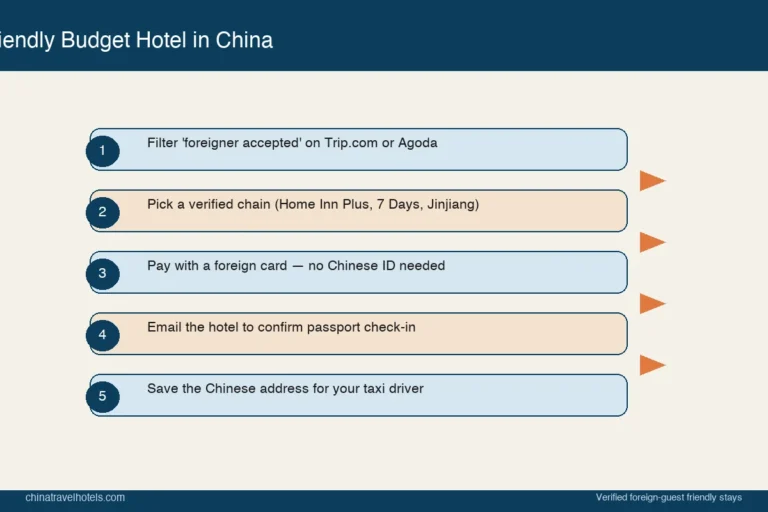
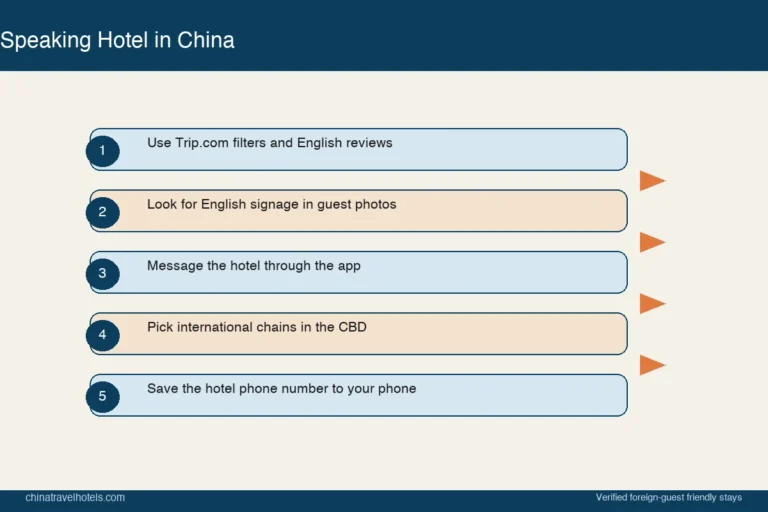
OTAs are usually the smoother path for foreign passport holders. Trip.com has strong Chinese inventory and English support; Booking.com and Agoda cover many international-brand hotels and accept foreign cards. They also provide written confirmation in English, which helps at check-in and with visa questions. Our best OTA guide for foreigners compares the main platforms in detail.
Price: direct is not always cheaper
It is a myth that direct is always cheapest. Chinese hotels often list lower rates on domestic OTAs than on their own sites because of platform commissions and promotions. Conversely, some independent hotels quietly offer a discount if you message them and book direct, skipping the commission. The only way to know is to price both.
Cancellation and dispute handling
OTAs centralise cancellation and give you a paper trail and a customer team that speaks your language. Direct bookings rely on the hotel’s own policy and your ability to communicate. If a dispute arises, our OTA refund dispute guide explains how to push back. And the head-to-head in Trip.com versus Booking.com helps you pick a platform with fair cancellation terms.
Payment friction with direct bookings
Many Chinese hotel sites want WeChat Pay or Alipay, which foreign guests may not have set up. OTAs let you use Visa or Mastercard. If you book direct, confirm payment method before you arrive, or you may face a stressful desk-side negotiation. Our guide to booking from abroad walks through methods that actually work.
Direct vs OTA at a glance
| Factor | Book direct | Through OTA |
|---|---|---|
| English support | Weak | Strong |
| Foreign card | Often no | Usually yes |
| Price | Sometimes lower | Often competitive |
| Cancellation | Hotel policy | Centralised, easier |
| Confirmation | Chinese likely | English provided |
Frequently asked questions
Is it cheaper to book a China hotel direct
Sometimes, but not always. Domestic OTAs often have promo rates. Always compare the hotel’s own price against two OTAs before deciding.
Which OTA is best for foreigners in China
Trip.com has the deepest local inventory and English support, while Booking.com and Agoda suit international-brand hotels. See our best OTA guide.
Can I pay a Chinese hotel directly with a foreign card
Many cannot take foreign cards online. At the desk some do via Visa terminals, but confirm in advance to avoid surprises.
Is direct booking riskier for cancellations
It can be, because you depend on the hotel’s policy and language. OTAs give a centralised, documented cancellation process that is easier to enforce.
Should I message the hotel before booking direct
Yes. Confirm they accept foreign guests, the rate, and payment method in writing. This protects you far more than a phone call you cannot prove.
Do OTAs show all Chinese hotels
No. Small independent and some budget hotels list only on domestic platforms. For those, our booking from abroad guide covers workarounds.
Will the hotel honour an OTA price at the desk
Yes, a confirmed OTA booking is a contract. Show the confirmation. If the desk balks, contact the OTA’s support while you are there.
Can I negotiate a better direct rate
At independent hotels, politely asking for a cash or direct discount sometimes works, especially for longer stays or off-peak nights. International chains rarely budge.