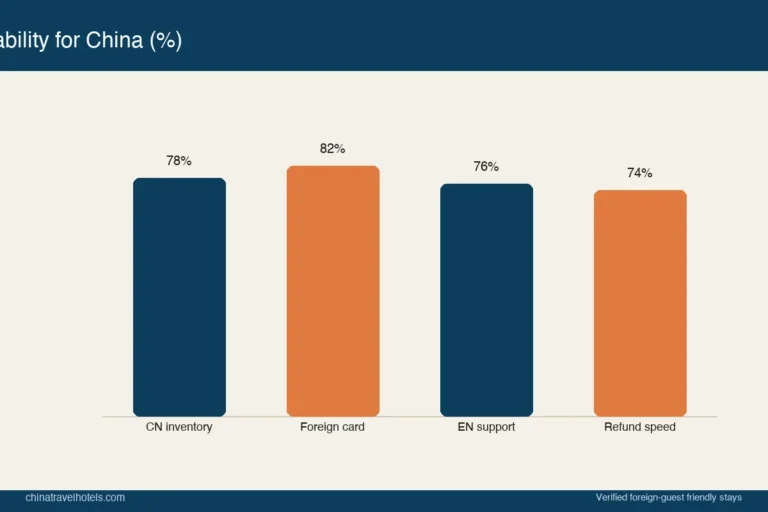
Booking a China hotel as a foreign passport holder is mostly like any online booking, with one extra step domestic travellers never face: ensure the property can register your passport before you pay. Do that, and the rest is standard — pick a site, enter dates, pay.
Start with platforms that list foreigner-friendly stock
Begin on the platforms that actually carry China inventory a foreigner can use: Trip.com, Booking.com, and Agoda cover the bulk of bookable, licence-holding hotels. Smaller regional sites often hide the foreigner-registration question entirely, which is exactly the information you need, so they are a weaker starting point. Our best OTA comparison ranks them by scenario so you know which to open first based on whether you want local inventory or a familiar interface.
Platforms at a glance
Before you book from abroad, the three main sites each play a role, and knowing which to open first saves time on a slow connection.
| Platform | Best for foreigners booking from abroad | Takes foreign card |
|---|---|---|
| Trip.com | Widest China inventory, Chinese-language support | Yes |
| Booking.com | Familiar global interface, international brands | Yes |
| Agoda | Budget price-checks, non-refundable deals | Yes |
All three take major foreign cards, so the choice is about inventory and support, not payment method. Pick one to start, then cross-check the others only if the rate or the foreigner-acceptance note looks weak.
Confirm the hotel accepts foreigners before paying
This is the step that prevents a ruined arrival. A platform booking is not proof the property can register a foreign passport, and smaller hotels in particular may lack the licence. Before you pay — especially a non-refundable rate — message the hotel or check its listing for a foreigner-acceptance note, and keep the reply. Our confirmation guide explains the exact question to ask and what a solid yes looks like in writing. Confirming from abroad costs minutes and removes the risk of a midnight refusal.
Enter dates and rooms correctly
Set your check-in and check-out dates in the hotel’s local time, not your home time, because a one-day slip is the most common avoidable error. Enter the correct number of guests, because room occupancy limits in China are enforced and an extra person can void a booking at the desk. Double-check the city and the specific district, since Chinese cities have multiple areas far apart and a wrong pin lands you miles from where you intended. A careful entry from abroad prevents a rebooking scramble on arrival.
Paying from overseas with a foreign card
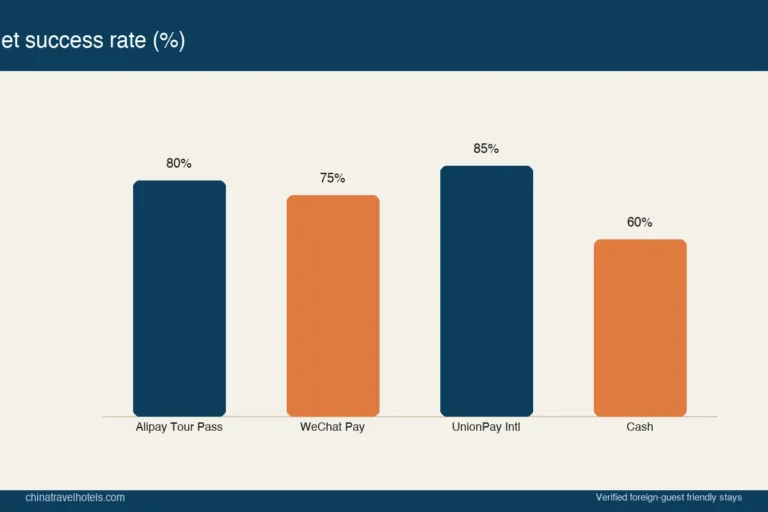
All three main platforms accept major foreign cards at checkout, and the charge settles in the platform’s currency or yuan depending on your setting. Warn your bank you are travelling to China so a large hotel charge is not auto-declined, and keep a backup card in case the first is rejected mid-booking. Save the confirmation and the charge record, because a failed but pending authorisation can temporarily block funds. Our check-in documents guide covers what you will later need at the desk, which is easier to prepare for from home.
Watch the cancellation window from abroad
Cancellation deadlines are usually Beijing time, which can be a full day off from where you sit when booking. Read the exact window and time zone before you pay, and screenshot the policy, because a missed deadline from a time-zone mix-up is the most common refund fight. For an uncertain itinerary, a flexible rate booked from abroad is often worth more than a rock-bottom non-refundable one you cannot change after a flight shift.
Save the hotel’s details in Chinese
Before you fly, copy the hotel’s name and address in Chinese characters into your phone, not just the English name. A taxi driver, a metro staffer, or a helpful local will read the characters, not the romanisation, and this single step prevents more arrival confusion than any app. Add the front-desk phone number and your confirmation number to the same note. Doing this from abroad, on calm Wi-Fi, is far easier than fumbling at the airport.
Consider booking the first night direct or flexible
For a first trip, book the first night on a flexible rate even if it costs slightly more, because flight delays and registration hiccups are most likely on day one. Once you have landed and confirmed the hotel works, you can extend or move with more confidence. Locking the entire trip into non-refundable rooms from abroad amplifies the cost of any single disruption, so keep at least the arrival night adjustable.
Use email to lock acceptance in writing
If the listing is unclear about foreigner acceptance, send the hotel a short email stating your nationality, dates, and room type, and ask them to confirm registration in writing. That reply is your evidence if the desk later hesitates, and it is easier to obtain from abroad than to negotiate after a long flight. Keep it as a PDF and a screenshot, and carry both to check-in. The written yes turns a risky booking into a documented agreement.
Dealing with platform language and app access
Booking from abroad means you may hit a platform that defaults to Chinese or shows prices in yuan, which is normal and not a problem once you switch the language and currency in the settings. Install the app and sign in before you travel so your preferences, saved card, and passport details are already loaded; setting this up on airport Wi-Fi is slower and riskier. If a listing loads in Chinese only, Trip.com’s English app is the smoother choice for a foreigner, and it still carries the local inventory you want.
What if the hotel has no listing on your platform
Some excellent licence-holding hotels simply are not on the global platforms, or they appear under a romanised name that does not match your search. If you found a property through a map or a recommendation, book it directly by email and confirm foreigner registration in writing, then use the platform only to cross-check the area. Direct booking also lets you ask the foreigner question up front, which is harder to surface on a thin listing. Keep the email thread as your confirmation, since there may be no app record.
Keeping records for immigration
From abroad, also save the confirmation somewhere you can show immigration if asked on arrival — a phone screenshot or a printed copy satisfies most checks. Some officers want to see where you are staying, especially on a visa-free or transit entry, and a clear hotel name and address speeds the line. Storing the booking in cloud email as well as the app means you are not dependent on one device or one network. The few minutes of organisation from home prevent a hold at the border that ruins the first hour of the trip.
What if your preferred hotel says no
If a hotel you like will not register foreigners, do not argue — move on. China has enough licence-holding properties across every price band that a refusal at one simply means finding another, and the platforms make comparison quick. Shortlist two backups before you fly so a single no does not become a crisis at midnight. The goal from abroad is a confirmed, registered, cancelable-enough booking, not a fight to stay somewhere that cannot take you.
Frequently asked questions
Can I book a China hotel from another country?
Yes, through Trip.com, Booking, or Agoda with a foreign card. The key extra step is confirming the hotel can register your passport before you pay.
Do I need to confirm foreigner acceptance?
Strongly yes, especially at smaller hotels. A platform booking is not proof of registration ability, so confirm in writing before paying non-refundable rates.
Which card should I use from abroad?
A Visa, Mastercard, or Amex works at checkout on the main platforms. Warn your bank about China travel so the charge is not declined.
Why do my dates matter in local time?
Cancellation and check-in times are Beijing time; a home-time mistake can cost you a night or a refund. Enter dates in the hotel’s local time.
Should the first night be flexible?
Often, yes. A flexible arrival night absorbs flight delays and registration hiccups better than a fully non-refundable trip booked from home.
What should I save before flying?
The hotel name and address in Chinese characters, the front-desk phone, your confirmation number, and the written foreigner-acceptance reply.
What if my hotel refuses foreigners?
Book elsewhere. Plenty of licence-holding hotels exist; keep two backups shortlisted so a refusal is not a midnight crisis.