China’s 240-hour visa-free transit lets eligible foreign passport holders stay in designated regions for up to ten days without a visa. Your hotel must still register your passport with local public security, so pick one that accepts foreign guests and confirm before arrival.
What the 240-hour transit rule actually allows
The programme, often called the 144-hour or 240-hour transit visa, lets travellers from many countries enter China without a visa when they have a confirmed onward ticket to a third country or region within the time limit. The key word is “transit”: you must be passing through, not ending your trip in China. The allowed stay has been extended to 240 hours in many entry cities, but the precise list of eligible nationalities, ports, and permitted areas changes, so confirm the current rules with the airline and Chinese immigration before you book anything.
Crucially, the freedom to stay visa-free does not override hotel registration. A foreign guest must still be registered with the local public-security bureau, and only licensed hotels can do that. Booking a place that cannot register you defeats the purpose of the transit allowance. Our guide on whether foreigners can stay in Chinese hotels covers the licence question in detail.
Where you are allowed to stay
Transit-visa travellers are generally confined to the city or region tied to their port of entry. Staying inside that zone is mandatory; crossing into another province without the right paperwork can void your transit status. This limits where you can book, because you need a hotel inside the permitted area that also accepts foreigners. International-brand and larger Chinese hotels in the main transit cities are usually safe choices, while small guesthouses may lack the registration licence.
Booking a hotel that registers foreigners
The single most important step is confirming the hotel can register a foreign passport. Many listings on the big platforms serve domestic travellers and quietly cannot process foreign registration. Before paying, message the property with your nationality and arrival date and ask directly whether they can complete the public-security registration for a transit visitor. Keep the reply. If you want a structured way to ask, our hotel confirmation email guide gives a template you can adapt.
Documents you need at check-in
Transit guests need the same core documents as any foreign visitor, plus proof of onward travel. Bring your passport, your confirmed flight or train to a third country or region, and any arrival card details. The hotel will copy your passport and submit the registration. The check-in documents guide lists exactly what to have ready so the front desk can process you without a delay that eats into your short stay.
| Item | Needed for transit stay? | Notes |
|---|---|---|
| Passport with visa-free eligibility | Yes | Must be from an eligible country |
| Onward ticket to third country/region | Yes | Required to qualify for transit |
| Hotel that registers foreigners | Yes | Not all properties can |
| Mainland Chinese visa | No | This is the point of the programme |
Timing your booking around the clock
The 240 hours start from a set time after entry, often midnight or the moment of clearance, depending on the port. Because your window is short, a late check-in or an early flight change can eat a full day. Book a hotel close to your arrival port to avoid long transfers, and confirm the front desk can register you late at night if you land after midnight. Some smaller desks close their registration system overnight, which is a problem you do not want on a ten-day clock.
Paying for a short transit stay
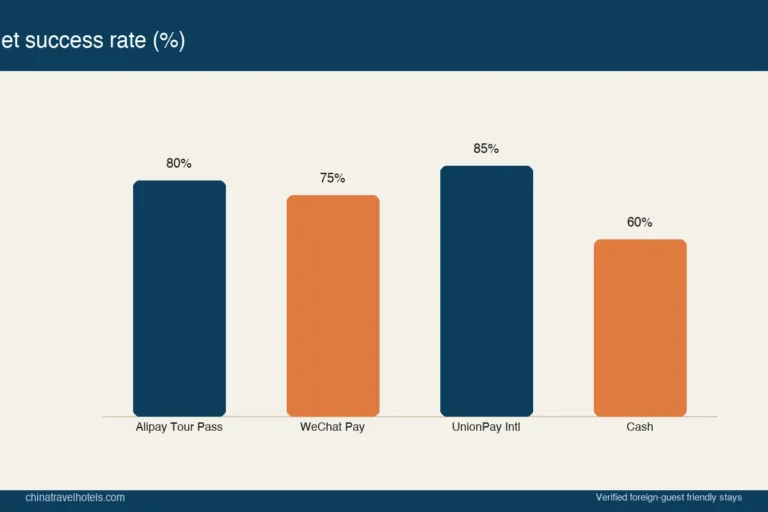
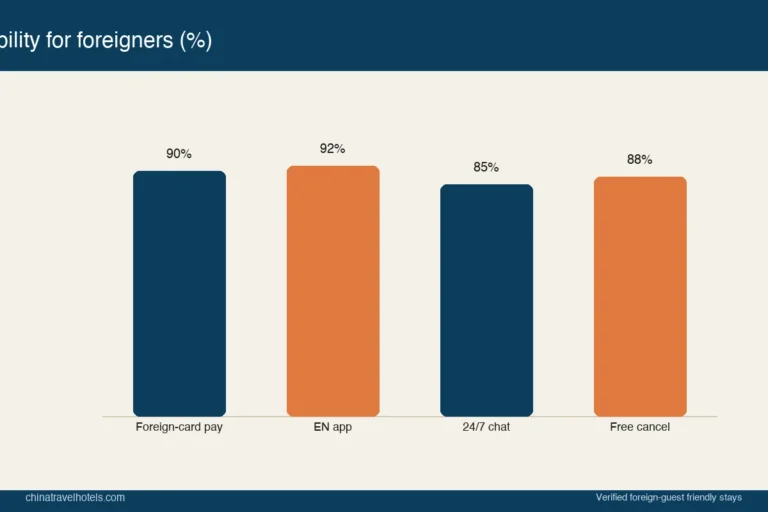
Short stays are usually paid by card through the platform, but a deposit at check-in is still common. Make sure your foreign card works and keep a backup, because a declined deposit can hold up your registration at a busy desk. If you booked a non-refundable rate and your onward flight is delayed, the hotel policy will not bend just because you are on a transit visa, so a flexible rate is often worth the small premium for a stay this time-sensitive. Note too that some transit guests arrive with two separate bookings — an inbound and an outbound — and the hotel only needs to see the onward leg leaving China, not the full itinerary.
Common mistakes transit guests make
The usual errors are booking outside the permitted zone, assuming any hotel can register foreigners, and underestimating how long registration takes when a desk is busy. Another is treating the transit allowance as a tourist visa; if immigration decides you are not genuinely in transit, you can be refused. Keep your onward booking real and your hotel inside the allowed area, and you remove most of the risk.
Airport hotel versus city hotel
For a ten-day transit stay you may want the city, but for a single overnight between flights an airport hotel is simpler. Airport properties near major hubs almost always hold the foreign-guest licence and run late-night registration, which removes the biggest transit risk. The downside is a dull location and a higher per-night rate. A city hotel gives you more to see but demands that you confirm both the licence and a reasonable transfer time, since a long drive eats into an already short window.
Language and app access during a short stay
You will likely rely on maps, translation, and the booking app while on transit, and some of those work better with a local eSIM or roaming data than with hotel Wi-Fi alone. Save your hotel’s address in both English and Chinese characters before you land, because a taxi driver or a pedestrian you ask for directions will not parse a romanised name reliably. Keep the confirmation email and the registration slip the desk gives you; you may need to show both if police or transit staff ask during your stay.
What if the hotel refuses at the desk
If a hotel that confirmed by message suddenly refuses foreign registration at the desk, you are in a bind because your clock is running. Call the platform and the local tourism hotline, and have your written confirmation ready. Our guide to what to do if a hotel refuses a foreign guest explains the escalation steps. For a transit stay, the faster fix is often moving to a known international hotel nearby that accepts foreigners without question.
Frequently asked questions
Who qualifies for the 240-hour transit visa?
Eligibility depends on your nationality, port of entry, and a confirmed onward ticket to a third country or region. The list changes, so verify with the airline and Chinese immigration before booking.
Can I leave the city on a transit visa?
Usually no. Transit guests are confined to the permitted city or region tied to their entry port. Straying outside it can void your transit status.
Do I still need hotel registration?
Yes. Visa-free transit does not remove the requirement that a licensed hotel register your passport with public security. Book a property that can do this.
What if my hotel cannot register me?
You need a different hotel. A property without the licence cannot complete the registration, and staying there puts your transit status at risk.
Should I book refundable for a transit stay?
Often yes. A flexible rate costs a little more but protects you if your onward flight shifts and the hotel’s own policy will not bend.
Is the onward ticket checked?
Yes, at entry and sometimes by the airline before boarding. Keep a real, confirmed booking to a third country or region.
Can I extend the 240 hours?
Extensions are not automatic and depend on the local authority. Do not plan around an extension; treat the window as fixed.