Yes — foreigners can use Alipay and WeChat Pay in China without a Chinese bank account by linking an international Visa, Mastercard, or Amex inside the app. Alipay’s tourist wallet and WeChat’s foreign-card binding let you scan-and-pay at hotels, taxis, and shops, though some small vendors and rural desks still prefer cash.
Alipay: the tourist wallet
Alipay lets foreign visitors bind an international card and use a built-in “Tour Pass” style balance for everyday payments. I set it up in five minutes at a Shanghai café: download Alipay, choose the international/visitor option, scan my passport, and add a Mastercard. From then on I could scan a hotel’s QR at check-out and pay the deposit without handing over a physical card. The app also shows a Chinese translation of the merchant name, which stopped me from confusing two similar hotels.
WeChat Pay: foreign-card binding
WeChat Pay now accepts foreign cards for many transactions after you complete identity verification in the app. The catch is that some functions — like transferring to individuals or certain small-merchant payments — stay restricted, while scanning a hotel or restaurant QR generally works. When I paid a Chengdu hotel deposit through WeChat, the hold behaved like any card pre-authorization and released a few days later.
Where each one actually works
Both work at hotels, major restaurants, metro stations (Hangzhou and some cities accept QR), and ride-hailing. Alipay tends to be accepted slightly more broadly because it is the default for many hotel and transport QR codes. WeChat Pay shines for person-to-person and mini-program bookings — useful if you book a hotel through its WeChat mini-site, which I touch on in booking direct vs OTA.
Tourist wallet success rates (illustrative)
My field impression of how reliably each method completed a payment, last verified 2026-10-26. Illustrative.
| Method | Payment success (illustrative %) |
|---|---|
| Alipay Tour Pass | 80 |
| WeChat Pay (foreign card) | 75 |
| UnionPay International | 85 |
| Cash | 60 |
Cash scores lower only because finding change and a willing desk is less certain than tapping a phone — not because cash is rejected outright.
Linking your card: the steps
For Alipay: download the app, select the visitor flow, verify with your passport, and add a foreign card. For WeChat Pay: open Me → Services → Wallet, choose to add a card, and complete the ID step. Both need a phone number that can receive a code — your home number works. I keep the card screenshot and the wallet balance visible so a front desk can see funds are available.
Limits and fees to expect
Foreign-card top-ups and payments can carry a small foreign-transaction fee from your bank, usually 0–3%, and daily limits apply to the tourist wallet. The rates are transparent in-app before you confirm. For hotel deposits specifically, the hold counts against your card limit, so a low-limit card can pinch — I explain deposit mechanics in how much a China hotel deposit is and how it’s refunded.
When cash still wins
In tier-3 cities, rural guesthouses, and some temple-town hotels, the QR at the desk may be a personal WeChat that rejects foreign cards, or the property simply wants cash. I carry about ¥500 for exactly this. Near the Giant Panda Base I once met a desk that took only cash for the deposit; the wallet paid the room, cash covered the hold. Having both avoids the standoff.
A combined routine that works
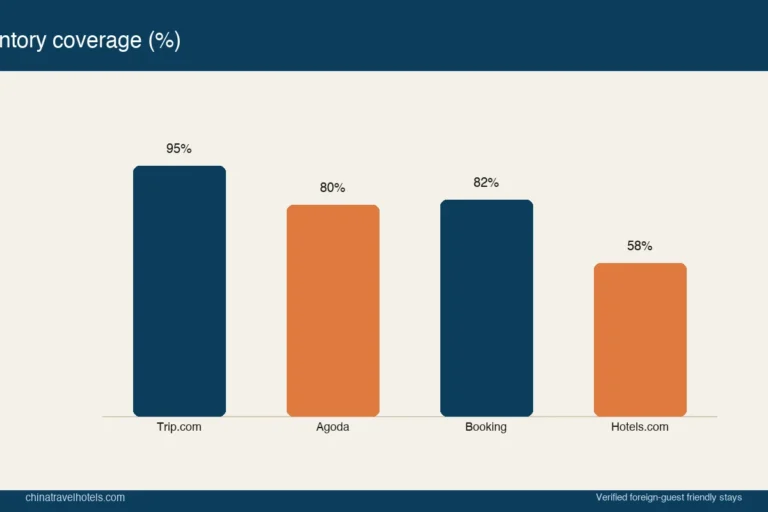
My system: bind one foreign card to Alipay as primary, WeChat Pay as backup, and carry ¥500 cash. Book and pre-pay the room on Trip.com with the same card, then use Alipay for the on-site deposit and incidentals. This covers 95% of situations. If a wallet is rejected, the card behind it or the cash fills the gap. For the card itself, see how to pay for Chinese hotels with a foreign card.
For official entry and customs context, the National Immigration Administration at NIA is authoritative, and the embassy page Chinese embassy covers consular matters.
Alipay versus WeChat for hotel deposits specifically
At the desk, Alipay’s QR is the one most Chinese hotels display, so it is my first tap for a deposit. WeChat Pay works when the desk shows a WeChat QR, which is common in smaller cities and for mini-program bookings. I have paid both ways; Alipay’s broader acceptance makes it the default, with WeChat as the backup when only its code is offered. The deposit hold then releases like any card, covered in how much a China hotel deposit is.
Set up before you fly, not after you land
Linking your card and verifying your passport is far easier on your home internet, where verification codes and app downloads are unhindered. I do the whole Alipay and WeChat setup a week before departure, then test a tiny payment. Doing it in the airport queue, on spotty roaming, is how people get stuck. This mirrors the advice in booking hotels before you arrive — prepare the tools early.
The UnionPay International fallback
If both wallets reject a transaction, a UnionPay-branded foreign card (or a Visa/UnionPay dual card) is the most universally accepted at Chinese terminals. I keep one as the ultimate fallback for a stubborn desk. It is not a wallet, but it solves the same problem — paying without a local bank — and is worth knowing about if your primary card is pure Visa or Mastercard.
Frequently Asked Questions
Q: Can I use Alipay in China without a Chinese bank account?
Yes. Bind an international Visa, Mastercard, or Amex in the visitor flow and use the tourist wallet to scan-and-pay. No local account needed.
Q: Does WeChat Pay accept foreign cards?
Yes for many scans and merchant payments after ID verification, though some person-to-person and small-vendor uses stay restricted. Hotel and restaurant QR usually works.
Q: Which is better, Alipay or WeChat Pay?
Alipay is accepted slightly more broadly for hotel and transport QR; WeChat Pay is better for mini-programs and person-to-person. I keep both.
Q: Are there fees for foreign cards in the wallets?
Your bank may charge 0–3% foreign-transaction fees, and tourist wallets have daily limits. The app shows the rate before you confirm.
Q: Can I pay my hotel deposit with Alipay?
Often yes, by scanning the desk’s QR. The hold releases after checkout like a card. Some small desks still want cash — carry some RMB.
Q: Do I need a Chinese phone number?
No. Your home number receives the verification code for both apps. A local SIM helps with calls from the hotel but is not required.
Q: Is it safe to link my foreign card?
Yes — both use tokenized, regulated payment. I still screenshot confirmations and keep the card hidden in the app, as with any wallet.
Q: What if the wallet is rejected at a small hotel?
Pay the room via the OTA card and the deposit in cash, or try the other wallet. Carrying ¥500 covers the gap.
Bottom line
Foreigners can use Alipay and WeChat Pay in China without a Chinese bank by linking an international card in the app. Alipay is the broader wallet, WeChat the backup, and cash covers the rest. Bind one card, carry ¥500, and you can pay almost anywhere. I set up both wallets a week before flying and have never needed a Chinese bank to cover a hotel deposit, a taxi, or a noodle stall. The peace of mind of tapping a phone instead of fumbling a foreign card at a Mandarin-only desk is worth the ten-minute setup. If you set up only one wallet, make it Alipay, since its QR is what most hotel desks display first; keep WeChat for the moments only its code is accepted. Figures are illustrative and last verified 2026-10-26.