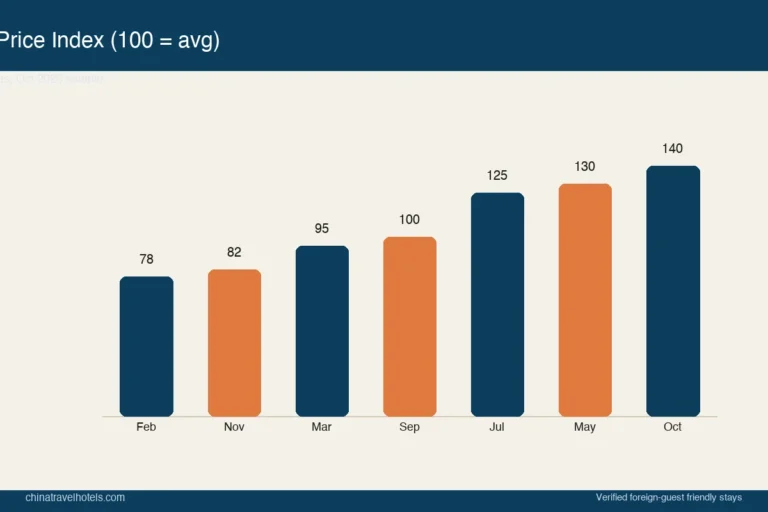
When you book a China hotel matters as much as which one you pick. Peak seasons drain inventory and spike prices, while the right lead time locks a foreigner-friendly room before a popular property fills. Book early enough to secure a licence-holding hotel, but not so early you lose flexibility.
China’s peak seasons drive the calendar
The big spikes are the Golden Week holidays in early October and May, the Spring Festival in late winter, and the summer school holidays from July to August. During these windows, domestic travel surges, hotels near attractions fill, and prices climb sharply. For a foreign guest, the added problem is that the hotels most reliable for passport registration — international brands and larger licensed properties — are exactly the ones domestic travellers also want, so they sell out first. Our budget hotels guide shows the per-night ranges you are trying to beat.
How far ahead to book
For normal periods, booking two to four weeks ahead is usually enough and keeps your rate flexible. For peak seasons or a major city event, book six to eight weeks ahead, because the best foreigner-friendly rooms disappear first and walk-up availability is thin. Booking too early — three or four months out — can lock you into a non-refundable rate you later regret if plans shift, so balance lead time against flexibility. The sweet spot is early enough to secure the hotel, late enough to keep a cancel option.
The foreigner-acceptance lead time
Beyond price, booking early gives you time to confirm the hotel can register a foreign passport, which is not instant for smaller properties. A last-minute booking leaves no room to ask, get a reply, and switch if the answer is no. Our best OTA comparison helps you shortlist platforms where foreigner-friendly stock is easier to find, shortening the confirmation step so you can book later and still be safe.
Shoulder seasons are the sweet spot
The weeks just outside peak holidays — late March to early May excluding the May holiday, mid-September, and November — offer milder prices, lighter crowds, and easier registration confirmation. A foreign guest who can shift dates by a week or two often finds better rooms at better rates and less desk pressure. Flexibility of even a few days is sometimes the most effective discount available, more reliable than any promo code the platforms push.
| Period | Booking lead time | Price pressure |
|---|---|---|
| Golden Week, Spring Festival | 6 to 8 weeks | Very high |
| Summer holidays | 4 to 6 weeks | High |
| Shoulder months | 2 to 4 weeks | Moderate |
| Quiet winter weeks | 1 to 2 weeks | Low |
Last-minute booking as a foreigner
Booking the day before or on arrival is risky for a foreign guest, because you may only find properties that either cannot register you or charge a premium for the leftover rooms. It is possible in major cities with deep inventory, but you trade the foreigner-acceptance check for convenience. If you must book late, use a platform that flags foreigner-friendly hotels and confirm acceptance by message before paying, even at short notice. Never assume a same-day room will take your passport without asking.
Balancing price and flexibility
The cheapest rate is usually non-refundable and booked early, but a foreigner’s plans can shift with visas and flights, so the real best time to book is when you can still choose a flexible rate. A slightly higher flexible rate booked a few weeks out often beats a rock-bottom non-refundable booked months ahead that you cannot change. Weigh the cancellation window against the lead time; the best booking is cheap enough and changeable enough for your actual risk.
City versus destination timing
Big hubs like Beijing and Shanghai have year-round inventory, so timing matters less there, while scenic destinations near the attractions in our guides tighten fast during holidays. If you are basing in a city and day-tripping, you can book later; if you are staying at the gate of a major sight, book earlier. The five-star versus four-star guide helps you judge which tier to target for your dates and budget, because higher-tier hotels hold foreigner licences more reliably.
Watching price drops after you book
Some platforms let you rebook at a lower rate if the price falls, and a few allow free cancellation up to a point, so booking early on a flexible rate does not mean locking a high price. Monitor the same room for a couple of weeks after booking; if it drops, rebook and cancel the dearer one. This only works on flexible rates, which is another reason not to grab the cheapest non-refundable option too soon.
Booking around major events and expos
Beyond the national holidays, big cities host trade fairs, expos, and sports events that fill hotels and lift prices for a week at a time — Canton Fair in Guangzhou is the classic example. If your trip overlaps one, book eight weeks out and confirm the hotel early, because the foreigner-friendly inventory disappears first. Check the city’s event calendar before you fix dates; shifting by a week can mean the difference between a reasonable rate and a sold-out city. The timing lever is as powerful as the platform choice here.
How cancellation windows interact with timing
Booking early on a flexible rate gives you the best of both: you lock a foreigner-friendly room before it sells out, and you keep the right to cancel if plans shift. The mistake is booking early on a non-refundable rate just to secure a date, then losing the room cost when your visa or flight moves. Match the cancellation window to your certainty: firm dates merit an early non-refundable; uncertain ones merit an early flexible. The timing decision and the rate-type decision are the same decision, made once.
Regional timing: north versus south
China’s climate splits the peak seasons by region, so the “best time” is not one date. The north is brutal in deep winter but lovely in autumn, while the south stays busy through the mild winter that northerners flee to. If you are flexible on city, you can chase the off-peak window of one region while another is packed, which often yields both lower prices and easier foreigner-acceptance confirmation. This is a timing trick beyond the headline holiday calendar that rewards a traveller who plans by weather as well as by dates.
Frequently asked questions
How early should I book China hotels?
Two to four weeks for normal periods; six to eight weeks for Golden Week, Spring Festival, or big events, because foreigner-friendly rooms sell out first.
Is last-minute booking safe for foreigners?
Risky. You may only find rooms that cannot register you or carry a premium. If you must, use a platform that flags foreigner-friendly hotels and confirm by message first.
What is the cheapest time to book?
Shoulder seasons — late March to early May excluding holidays, mid-September, November — offer lower prices and easier registration confirmation.
Should I book non-refundable early?
Only if plans are firm. A flexible rate booked a few weeks out often beats a cheap non-refundable booked months ahead that you cannot change.
Do big cities need less lead time?
Yes. Beijing and Shanghai have deep inventory year-round, while scenic destinations near major sights tighten fast during holidays.
Can I rebook if the price drops?
On flexible rates, often yes — rebook the lower rate and cancel the dearer one. This does not work on non-refundable bookings.
Why does foreigner acceptance affect timing?
Confirming a hotel can register your passport takes time; booking early leaves room to ask and switch if the answer is no, avoiding a midnight refusal.