For foreign visitors, the best Beijing base is inside the Second Ring Road — Chaoyang around Sanlitun, or Dongcheng near the Forbidden City and Houhai. These zones put you on clean metro lines, near English-speaking hotels, and within easy reach of the sights, avoiding suburban commutes.
Why location matters more in Beijing
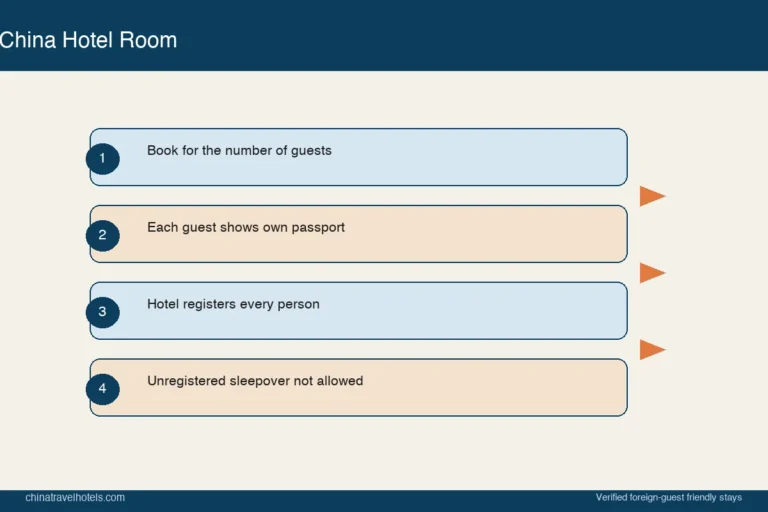
Beijing is enormous and ringed by concentric highways, so where you sleep decides how much of your day vanishes on the subway. The city’s metro is excellent and cheap, but a hotel out near the Fifth Ring means forty minutes just to reach the centre. Foreign guests also benefit from staying where international hotels cluster, because those properties are practised at passport registration, English front desks, and foreign-card payments — exactly the friction points covered in our guide to hotels that accept foreign guests. Picking the right district is half the battle for a smooth trip.
Chaoyang: the embassy and Sanlitun hub
Chaoyang is the default for first-time foreigners, and for good reason. Sanlitun is packed with international hotels, bars, embassies, and restaurants where English menus are normal. The nearby embassy area means a high density of foreign-resident services. You are on Line 10, the loop line that connects to almost everywhere, and a short taxi or metro ride from the Forbidden City. The trade-off is price — Chaoyang rooms cost more — but for a short stay the convenience is worth it. This is also where many of the international chains plant their flags, and they are the safest bet for a first stay.
Dongcheng: history on your doorstep
If your trip is sight-driven, Dongcheng puts you inside the old city near the Forbidden City, Tiananmen, the Temple of Heaven, and the hutong lanes around Houhai and Nanluoguxiang. Staying here means you can walk to major sights and eat in atmospheric alleyway restaurants. Hotels here range from boutique hutong courtyards to large four-star towers. The metro (Lines 1, 2, 5, 8) is dense, so getting around is easy even without a subway hub on your block. Our where to stay near the Forbidden City resource is worth a look, though note that some courtyard guesthouses are smaller and less practised with foreign registration.
Wangfujing and the centre
Wangfujing, just east of the Forbidden City, is a tourist-magnet shopping strip with big international hotels and a pedestrian street. It is central, walkable to the sights, and on Line 1. The downside is that it feels commercial and crowded; you trade local character for convenience. For a first visit where you want a familiar hotel brand and a metro stop downstairs, it is a safe pick, but it lacks the nightlife texture of Sanlitun or the lanes of Dongcheng.
Haidian and the west: skip unless you must
Haidian holds the universities and the Summer Palace, and it is where some budget travellers land because rooms are cheaper. But it is far from the core sights and the commute drains a sightseeing day. Unless you have specific business at a university or the Summer Palace, stay central. The same logic applies citywide: the savings of a suburban room rarely justify the lost time, especially on a short visa-stamped itinerary.
Airport and transit practicalities
Beijing Capital (PEK) and the newer Daxing (PKX) are both far from the centre — budget an hour-plus by express train or taxi. Staying near a Line 2 or Line 10 station makes the airport run simpler. If you have an early flight, some travellers book an airport-hotel the night before; otherwise, factor the transfer into your hotel choice. A hotel that is practised at foreign check-in will also smooth any early departure.
Choosing by trip style
| If your trip is… | Best area | Why |
|---|---|---|
| First visit, easy English | Chaoyang / Sanlitun | International hotels, Line 10 |
| Sightseeing focus | Dongcheng | Walk to Forbidden City, hutongs |
| Shopping + brand hotels | Wangfujing | Central, Line 1 |
| University / Summer Palace | Haidian | Only if necessary |
Budget versus comfort trade-offs
Beijing’s prices rise steeply toward the centre, but the metro is so good that a slightly outlying room on Line 2 or Line 10 still works. The real cost of going cheap is registration friction: smaller suburban hotels sometimes fumble foreign passport check-in, which our refusal-reasons guide explains. Pay a little more to stay where foreigners are expected, and you avoid the single most common headache.
Getting around from your hotel
Once settled, the metro is your friend, but a few habits help. Buy a Beijing public-transport card or use the local app, and keep your hotel’s name and address in Chinese characters on your phone to show taxi drivers — English addresses confuse them. Walking is pleasant inside the Second Ring but the blocks are huge, so a short metro hop often beats a long stroll. Ride-hailing apps work but need a Chinese payment method or an international card through the app; your hotel concierge can call a taxi if your apps fail, and that old-fashioned route is reliably smooth.
Safety, language, and what to expect
Beijing is safe for foreign visitors, with little petty crime, but the language gap is real outside top hotels. Download a translation app that works offline for menus and signs, and save your hotel’s pin in maps. Police and staff are helpful even without English; a smile and patience go far. The city is clean and well lit at night in central districts, so returning to your hotel late is rarely a concern. Confirm any tour or taxi price before agreeing, and you will avoid the few scams that target tourists near the big sights.
Booking tips for foreign cards and confirmation
When you book, use a platform that displays English and accepts your foreign card, and keep the confirmation handy at check-in alongside your passport. Call or message the hotel a day ahead to reconfirm they accept foreign guests and note your arrival time, since a smooth check-in depends on the desk expecting you. If your plans include the Great Wall, base yourself so the express bus or train to the segments is simple — the Mutianyu stay guide helps if the Wall is a priority, though most visitors day-trip from a central Beijing hotel rather than changing bases for it.
Best time to visit and weather
Beijing has brief, humid summers and long, dry, cold winters, with spring and autumn the most comfortable for walking the hutongs and the outdoor sights. If you visit in summer, choose a hotel with reliable air conditioning and request a room away from west-facing sun. Winter brings cheap rooms and clear wall views but biting wind, so pack accordingly and prefer a hotel with good heating, because older northern buildings can feel chill despite central systems.
Frequently asked questions
Which Beijing area is best for first-time foreigners?
Chaoyang around Sanlitun. It has international hotels, English menus, and Line 10 access to everywhere.
Is it worth staying inside the Second Ring Road?
Yes for a first visit. You cut commute time and stay near hotels practised with foreign guests.
Can I stay in a hutong courtyard?
Yes, in Dongcheng. They are charming but smaller and sometimes less smooth with passport registration.
Should I stay near the airport?
Only the night before an early flight. Both airports are far; central stays are better for sightseeing.
Is Wangfujing a good base?
Convenient and central with big hotels, but crowded and commercial. Good for brand-hotel comfort.
How do I avoid hotels that reject foreigners?
Stay in districts with international chains and read our guide on why some hotels refuse foreign guests.
Is the metro enough, or do I need a central hotel?
The metro is enough, but a central room on Lines 2 or 10 saves time on a short trip.