Best Area to Stay in Chengdu for Foreigners (2026)
If you are landing in Chengdu for the first time and wondering where to base yourself, the short answer is: stay in the Jinjiang District around Tianfu Square or Chunxi Road if you want walkable metro access, international hotels, and the easiest foreigner-friendly check-in. Kuanzhai Alley (Wide and Narrow Alley) is the better pick if you want a characterful, walkable old-town feel with courtyards and street food. I have spent three separate trips in Chengdu between 2023 and 2025, and the difference between a good base and a bad one comes down to one thing: how much time you want to lose on the metro.
Key Takeaways
- Best all-rounder: Tianfu Square / Chunxi Road (Jinjiang) — central, metro-rich, foreigner-welcoming chains.
- Best for atmosphere: Kuanzhai Alley — restored Qing-era lanes, boutique courtyard hotels, lively at night.
- Best for business: Jiaozi Financial City (Hi-Tech Zone) — newer towers, quieter, closer to the convention centers.
- Avoid staying far out near the airport or in remote suburbs unless you have a specific reason; Chengdu is huge and commutes add up.
- Most international-brand and large Chinese-chain hotels accept foreign passports and international cards without drama; always reconfirm at booking.
Why Chengdu Is Easy — and Where It Gets Tricky
Chengdu is one of the most foreigner-friendly big cities in China. The metro is clean, cheap, and has English signage; ride-hailing apps work; and the food scene is unbeatable. The trick is that the urban area is enormous — greater Chengdu spans well over 10,000 square kilometers — so “Chengdu” on a map can mean very different things. Picking the right district keeps you close to the places you actually came for: the panda base, the alleys, the hotpot, and the high-speed trains to elsewhere in Sichuan.
On my first trip I made the classic mistake of booking a “great deal” near the South Railway Station thinking it was central. It was 40 minutes by metro from the old town, and every evening ended with a tired metro sprint. The second trip, I stayed walking distance from Chunxi Road and the whole city opened up.
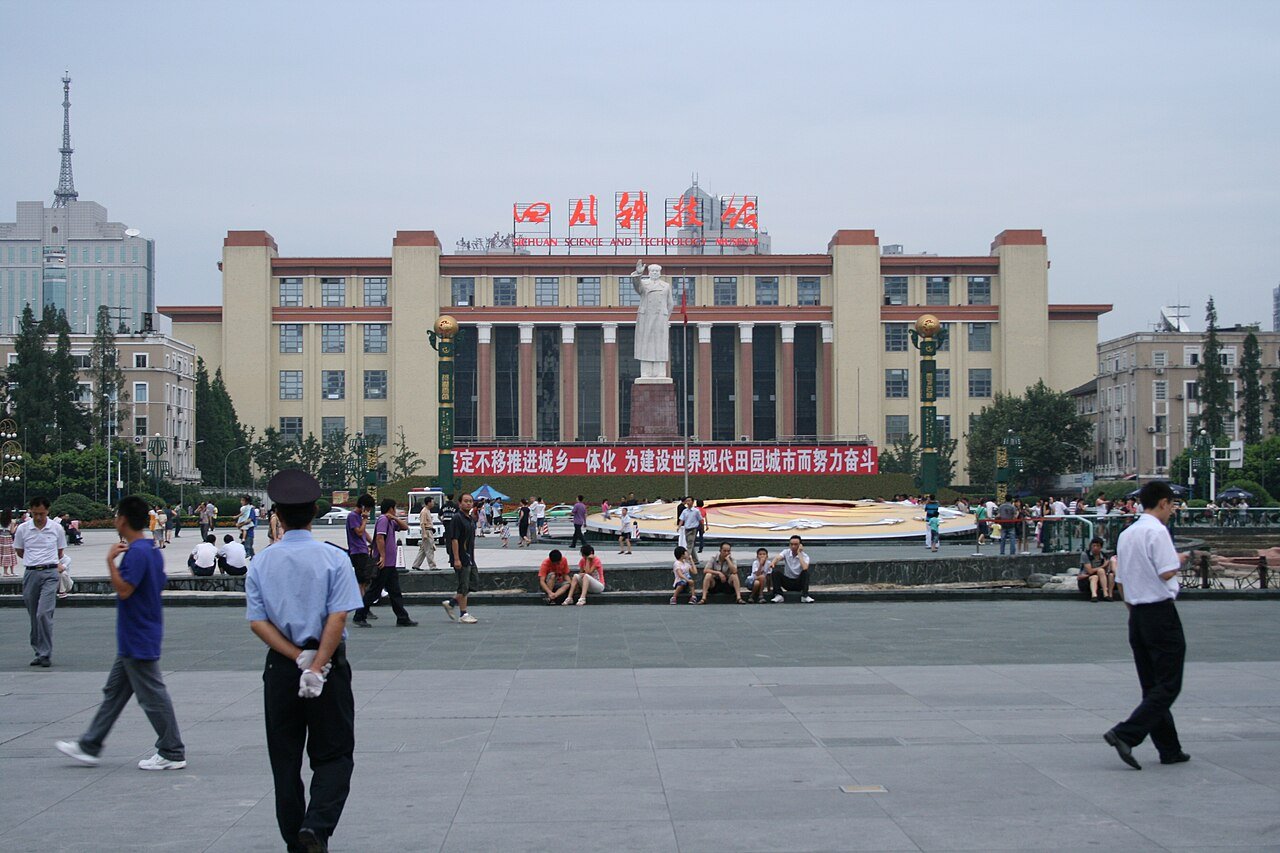
Tianfu Square & Chunxi Road (Jinjiang District)
This is the true center. Tianfu Square sits on top of a major metro interchange (Lines 1 and 2), and Chunxi Road is the city’s flagship shopping and dining strip a few minutes north. You are within walking distance of:
- The Sichuan Opera and Shu Feng Ya Yun face-changing shows
- Endless hotpot and Sichuan cuisine
- Department stores and malls with English-friendly staff
- Quick metro hops to the Panda Base (via Line 3) and the railway stations
Hotels here range from international five-stars (St. Regis, Niccolo, Conrad) to reliable Chinese chains (Atour, Narada, Minyoun). For a first-time visitor who wants zero friction, this is the safest, most comfortable base. The trade-off is that it is busy and can feel generic compared with the old town.
Kuanzhai Alley (Wide and Narrow Alley)
Kuanzhai Alley is a restored cluster of Qing-dynasty lanes — “Kuan” (wide), “Zhao” (narrow), and “Jing” (well) — packed with teahouses, bars, craft shops, and boutique courtyard hotels. Staying here puts you inside the most photogenic, walkable part of the city. On my 2024 trip I stayed in a converted courtyard just off the quiet lane, and mornings meant tea by the pond before the tour groups arrived.
The downside: rooms in the historic buildings are smaller and quieter-insulated than the towers, and prices climb on weekends. If you value character over square footage, it is worth it. Book directly with the property or a major platform and confirm they accept foreign passports — smaller guesthouses sometimes fumble the registration step.
Jiaozi Financial City / Hi-Tech Zone
If you are in Chengdu for a conference, a tech meeting, or just want a calmer, newer neighborhood, the south-side financial district (Jiaozi) delivers. The hotels are newer, the streets are wider, and it connects to the airport and the South Railway Station efficiently via Line 1 and the tram. It is less atmospheric, but the rooms are bigger and the lobbies are polished. Business travelers and anyone with early trains to Chongqing or Kunming should consider it.
How to Choose: A Quick Comparison
| Area | Best for | Vibe | Metro access | Typical price (night) |
|---|---|---|---|---|
| Tianfu Sq / Chunxi | First-timers, shoppers | Bustling, central | Excellent (Lines 1, 2, 3) | ¥400–¥1,400 |
| Kuanzhai Alley | Atmosphere, foodies | Historic, walkable | Good (Line 4) | ¥500–¥1,200 |
| Jiaozi / Hi-Tech | Business, calm | Modern, quiet | Good (Line 1) | ¥450–¥1,100 |
| Near South Railway Stn | Transit only | Functional | Excellent | ¥300–¥700 |
Use this table as a filter, not a verdict. Your single biggest lever is the metro line you will use most.
Getting Around From Your Hotel
Chengdu’s metro uses a unified QR ticket inside the “Tianfu Tong” or Alipay/WeChat mini-programs, but as a foreigner you may find it easier to buy a physical transit card or use the foreign-card-friendly options. Either way, staying on Lines 1, 2, or 3 puts you within reach of almost everything. The Panda Base is best visited at opening (07:30) to beat crowds and heat — a north-side hotel shaves real time off that morning.
Tip: If you plan day trips to Leshan or Mount Emei, the South or East Railway Station matters more than the city center. Check your train origin before locking a neighborhood.
Where to Eat Near Each Base
Chengdu is a food city, and your hotel’s location decides your late-night options. Around Chunxi, you have everything from Michelin-recognized Sichuan fine dining to hole-in-the-wall noodles. Around Kuanzhai, the alleys themselves are a street-food runway — just walk one lane back from the main drag to escape tourist pricing. In Jiaozi, the malls and new streets have clean, air-conditioned hotpot chains that are gentler on first-timers’ spice tolerance.
Booking Tips for Foreign Guests
A few things I learned the hard way:
- Passport registration is mandatory at every hotel in China. Bring your passport to check-in; the front desk uploads your details to the local police system. It is routine, but a hotel that “doesn’t accept foreigners” has usually just never done the paperwork — stick to chains and international brands to avoid the awkward turn-away.
- International cards work at the big chains, but pre-authorization holds on deposits can take days to release. See our guide on how hotel deposits are refunded to foreign cards before you panic about a “missing” charge.
- Book on a platform you can reach. Trip.com and the major international sites show real-time foreigner acceptance far more reliably than small listings. Compare options in our Trip.com vs Booking vs Agoda breakdown.
Best Time to Visit and How It Affects Your Stay
Spring (March–May) and autumn (September–November) are ideal — mild, less smog, and the alleys are pleasant for long walks. Summer is hot and humid; pick a hotel with a reliable pool or good AC. Winter is cold but festive, with the Lantern Festival lighting up the squares. Avoid the first week of May (Labor Day) and the first week of October (National Day), when domestic tourists flood the city and room rates double.
Planning Your Chengdu Stay
A good Chengdu plan runs three to four days: one for the Panda Base and a relaxed old-town evening, one for Leshan or Emei as a day trip, and one for the city’s museums and food. Base yourself centrally and let the metro do the work. Whether you want the polished comfort of Chunxi Road or the lantern-lit lanes of Kuanzhai, Chengdu rewards the traveler who picks a base and walks outward from it.
Ready to lock in your room? Compare foreigner-friendly options and book through a platform that confirms passport acceptance up front — then spend your energy on the hotpot, not the commute.
Written by Karl Huang — I have based myself in all three areas across trips in 2023, 2024, and 2025, and these notes come from those stays. Confirm current prices and foreigner acceptance directly with the hotel before booking, as policies change.