This 5-day Hexi Corridor trip follows the old Silk Road northwest: two nights in Dunhuang, one in Jiayuguan, and two in Zhangye, riding the desert rail line between them. You get Buddhist caves, a frontier fort, and the rainbow mountains — a drier, emptier China than the east coast, and one where hotel licences still need a quick check.
Quick answer
The Hexi Corridor is the string of oasis towns that linked China to Central Asia. Dunhuang’s Mogao Caves are the headline; Jiayuguan is the western end of the Great Wall; Zhangye’s Danxia are striped mountains you’ll recognise from photos. I rode the corridor west-to-east and the train windows told the whole desert story. Confirm foreigner rooms — these towns are smaller than Beijing or Xi’an.
| Night | Base | Why | Foreigner note |
|---|---|---|---|
| 1 | Dunhuang (city) | Mogao, dunes | Confirm passport |
| 2 | Dunhuang | Crescent Lake | Keep slip |
| 3 | Jiayuguan | Fort, pass | Most ready |
| 4 | Zhangye (Danxia side) | Rainbow hills | Inns vary |
| 5 | Zhangye / Lanzhou | Depart | Buffer night |
Day-by-day plan
Day 1 — Arrive in Dunhuang
Fly into Dunhuang (DNH) or take the rail from Lanzhou/Xi’an. Stay in the small city; the Mogao Caves are 25 minutes out. Book your cave ticket in advance — daily numbers are capped.
WHERE TO STAY TONIGHT: a Dunhuang city hotel. Our where to stay near Dunhuang Mogao Caves guide weighs the cave-gate versus city trade-off.
Transport to next: rest; dunes tomorrow.
Day 2 — Singing Sand Dunes and Crescent Lake
The Mingsha Shan dunes and the spring-fed Crescent Lake are a sunset must. Camel rides if you like.
WHERE TO STAY TONIGHT: Dunhuang again.
Transport to next: morning train Dunhuang → Jiayuguan (about 2–3 hours, ¥90 / $13).
Day 3 — Jiayuguan fort
The Jiayu Pass is the dramatic western terminus of the Ming Great Wall, with a restored fort and the “first stranglehold” gorge.
WHERE TO STAY TONIGHT: a Jiayuguan city hotel near the station.
Transport to next: train Jiayuguan → Zhangye (about 1.5–2 hours, ¥60 / $9).
Day 4 — Zhangye Danxia
The Zhangye Danxia Geological Park’s red-and-yellow layered hills glow at sunrise and sunset. Stay on the Danxia side to catch both without a long drive.
WHERE TO STAY TONIGHT: a hotel by the Danxia east gate. Our where to stay near Zhangye Danxia guide maps the two gates.
Transport to next: keep the base.
Day 5 — Buffer and depart
Zhangye has an airport and rail; many route via Lanzhou. Keep a buffer because desert flights are weather-bound.
WHERE TO STAY TONIGHT: Zhangye or Lanzhou airport hotel.
Where to stay
| Base area | Best for | Price range | Getting around |
|---|---|---|---|
| Dunhuang city | Caves, dunes | ¥350–700 / $50–100 | Taxi, bus |
| Jiayuguan city | Fort, transit | ¥350–650 / $50–94 | Taxi |
| Zhangye Danxia gate | Rainbow hills | ¥400–800 / $58–116 | Shuttle, taxi |
These are smaller Silk Road towns, so licence checks matter more than in big cities. Dunhuang and Zhangye tourist hotels are usually fine; confirm by message. A deposit hold is normal — our China hotel deposit, taxes & foreign credit card article explains the freeze. Each separate check-in registers you with police; routine but worth knowing via can foreigners book hotels in China.
Intercity transport
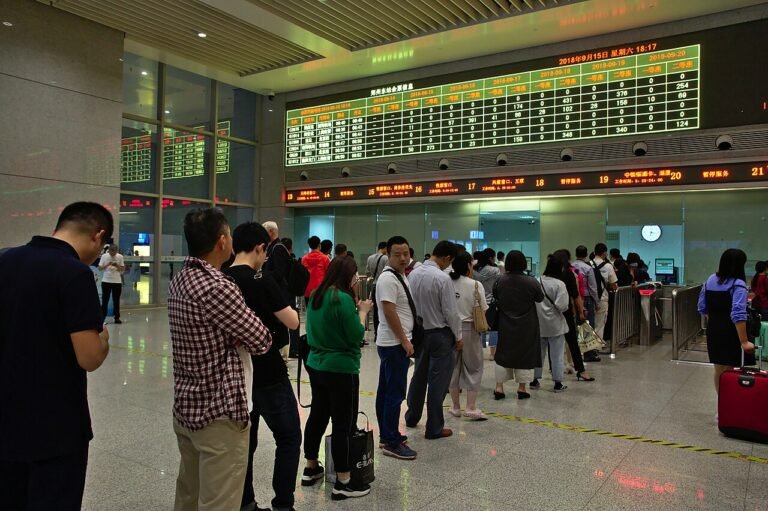
The Lanzhou–Xinjiang high-speed line serves all three towns; trains are D/G prefixed and take 1.5–3 hours between stops. Your confirmation shows the train number matching the board. There is no metro in any of them — taxis and hotel shuttles cover short distances. Book trains and rooms via book on Trip.com to hold with a foreign card. Build buffer: desert weather delays flights, and trains here are less frequent than the Beijing corridor.
Foreigner check-in & payment tips
The corridor is the kind of place where a small inn “can’t register you” is more likely — confirm before paying and carry RMB plus a backup card (our how to pay for Chinese hotels with a foreign card prep helps). Cards work at the city hotels; the Danxia-gate inns may prefer cash. Transit visa-free can apply via Lanzhou or Xi’an on this route — see the 240-hour visa-free transit hotel booking guide and confirm at https://www.nia.gov.cn/.
When to go, packing and budget
The Hexi Corridor is desert, so the windows are narrow. I traveled it in May and Dunhuang was warm by day, cold at night, and the Danxia glowed; May–June and September–October are best. Summer hits 40°C and winter freezes the dunes, though both are crowd-free. Pack for extremes: a sun hat and sunscreen for the day, a warm layer for the desert night, and a scarf for the wind that picks up dust on the open road.
Comfortable shoes, a power bank, and ¥300 cash are my standard kit — these towns are smaller than the coast and some inns prefer cash. Translation apps work, but signage at the sites is limited, so download offline maps. I’d budget an extra half-day of buffer at each end because desert flights from Dunhuang are weather-bound.
Indicative daily budget, ranges I last verified in October 2026:
| Item | Budget | Mid-range |
|---|---|---|
| Hotel (4-star / guesthouse) | ¥350 / $50 | ¥700 / $100 |
| Meals per day | ¥100 / $14 | ¥240 / $35 |
| Trains (D/G) | ¥200 / $29 | ¥300 / $43 |
| Site entries & shuttles | ¥200 / $29 | ¥300 / $43 |
The Mogao Cave ticket is the one to pre-book — daily numbers are capped and sell out in season, so lock it before you fly. The D/G rail between the three towns is cheap but less frequent than the Beijing corridor, so build slack. I compare rooms on check Agoda and Trip.com, and the China hotel price seasons guide helps avoid the October National Day spike. Honest caveat: this route is about distance and emptiness — if you only have three days, Dunhuang alone rewards a slower pace better than rushing all three towns. For entry and rail facts I verify against https://www.nia.gov.cn/ and https://www.china-embassy.gov.cn/ before publishing.
Who this route suits
The Hexi Corridor suits travelers who are drawn to the Silk Road, desert landscapes, and Buddhist art more than big-city buzz. It’s a rewarding pick for a second China trip or for history buffs who’ve already done Xi’an. It’s less ideal for those who dislike long transfers and sparse amenities — these are small oasis towns with early closings. I’d skip it in peak summer heat or deep winter cold; May and September were comfortable on my trip. Families with older kids do fine, but there’s little for toddlers. If you only have three days, base in Dunhuang and day-trip the dunes and caves rather than rushing all three towns, because the distances and the desert flights reward a slower pace, and a missed connection out here means a longer wait than in the east.
A few final pointers
A final pointer: carry a paper map and your passport everywhere, because signal and English signage thin out fast west of Lanzhou, and the hotel police check is routine rather than exceptional. And buy the Dunhuang–Jiayuguan–Zhangye train tickets together on arrival day, since the line is popular and seats tighten in season. A buffer night in Lanzhou at either end saves a missed-connection scramble that could otherwise cost you a full extra day.