A 3-day Shanghai weekend works best from one central base near People’s Square or Nanjing Road East, because Line 1, 2 and 8 meet there and put the Bund, the French Concession and the train stations within 20 minutes. Stay put for both nights and use the metro, not taxis, to beat the traffic.
Quick answer
Shanghai is the easiest Chinese city for a short foreign visit: signage is bilingual, the metro is world-class, and you can do the icons in a relaxed weekend. I treat it as a base-camp city — check in once, drop the bags, and radiate out.
| Night | Base | Why | Foreigner note |
|---|---|---|---|
| 1 | People’s Sq / Nanjing Rd E | Metro hub | Most hotels licence-ready |
| 2 | Same base | No move | Keep registration slip |
| 3 | Airport or station | Depart | Early flight? stay near PVG |
Day-by-day plan
Day 1 — The Bund and Lujiazui
Land at PVG (maglev to Longyang then metro) or Hongqiao. Check in, then walk Nanjing Road to the Bund for the skyline across the Huangpu. Cross by ferry or metro to Lujiazui for the skyscraper trio — Shanghai Tower, Jin Mao and the Oriental Pearl.
WHERE TO STAY TONIGHT: central, near People’s Square. Our where to stay near the Bund Shanghai guide breaks down Lujiazui versus the old town if you want a river view instead.
Transport to next: metro Line 2 covers most of this loop.
Day 2 — French Concession and old town
The tree-lined Former French Concession (Wukang Road, Xintiandi) is where you escape the neon. Afternoon: Yu Garden and the old bazaar, then Tianzifang’s lanes.
WHERE TO STAY TONIGHT: same base, no packing.
Transport to next: metro Lines 10 and 13 serve the concession; Line 1–2–8 hub returns you home.
Day 3 — Zhujiajiao or museums, then out
A half-day trip to Zhujiajiao water town (metro Line 17) gives you canals without leaving the city system, or spend the morning in the Shanghai Museum. Then head to your departure point.
WHERE TO STAY TONIGHT: if flying early, move to a PVG or Hongqiao hotel; otherwise you are already packed.
Where to stay
| Base area | Best for | Price range | Metro |
|---|---|---|---|
| People’s Sq / Nanjing Rd E | Hub, walkable | ¥600–1,200 / $87–174 | Lines 1, 2, 8 |
| The Bund / Lujiazui | River views | ¥900–2,000 / $130–290 | Lines 2, 12, 14 |
| French Concession | Cafés, calm | ¥700–1,500 / $100–217 | Lines 10, 13 |
Central hotels almost all take foreign passports — Shanghai is the least likely place you’ll be turned away. Still, a quick confirmation saves a late-night shuffle; the can foreigners book hotels in China guide lists exactly what to check.
Intercity transport
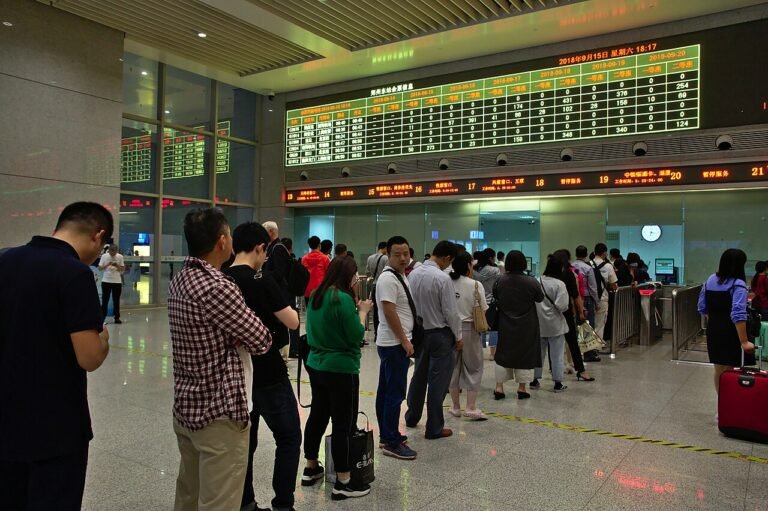
For a weekend you mainly use the metro and the two airports. Metro line IDs are simple numbers (Line 1, 2, 10…) and the official map at https://www.shmetro.com/ is bilingual and reliable for planning. The maglev from PVG to Longyang Road (Line 2) is a novelty worth one ride — 7 minutes, 300 km/h. Trains out (Hongqiao Railway Station) use the national G/D numbering; your confirmation carries the train number and seat. Book beds and rooms through book on Trip.com and you can hold with a foreign card.
Foreigner check-in & payment tips
Shanghai is smooth, but two things still trip visitors. Deposits at upscale hotels can be a sizeable pre-authorisation — know the amount before you swipe, as our China hotel deposit, taxes & foreign credit card article warns. And the Alipay/WeChat tap-to-pay works for foreigners now, but a physical card is still the fallback in small cafés — see how to use Trip.com as a foreigner for the app setup that makes the whole trip easier. Police registration is automatic at licensed desks; you’ll just sign a form.
When to go, what to pack, and what it costs
Shanghai has four genuine seasons, and the difference between a good trip and a sweaty one is mostly timing. I’ve now been three times: an October visit was perfect — 22°C, blue skies, the plane trees in the Former French Concession glowing yellow — while a July trip was a mistake, with 90% humidity and the Bund packed shoulder-to-shoulder. Spring (April–May) and autumn (September–November) are the sweet spots. Summer brings typhoon-risk downpours; winter is grey, damp and cheap.
Pack for walking. The Bund’s stones and the metro’s endless staircases punish bad shoes, and you’ll be on your feet most of the day. A fold-up umbrella lives in my daypack year-round, along with a power bank because translation and maps eat battery. The city is almost cashless — my Alipay linked to a foreign card handled 95% of spending — but I keep ¥200 in notes for temple donation boxes and the odd taxi that refuses e-payment.
A realistic daily budget, illustrative ranges I last checked in October 2026:
| Item | Budget traveler | Mid-range |
|---|---|---|
| Central 4-star hotel | ¥600 / $87 | ¥1,200 / $174 |
| Meals per day | ¥120 / $17 | ¥320 / $46 |
| Metro + maglev/ferry | ¥35 / $5 | ¥90 / $13 |
| Attractions & cafés | ¥150 / $22 | ¥350 / $51 |
Hotel rates can double during Golden Week (early October) and Spring Festival, so the China hotel price seasons guide is worth reading before you lock dates. Booking the room through check Agoda alongside Trip.com lets you compare the foreigner-acceptance flag, something I do for every Shanghai stay.
One honest caveat: the maglev is a fun novelty but only saves time if your hotel is near Longyang Road; for most visitors the metro Line 2 straight from PVG is simpler. And don’t over-plan the water town — Zhujiajiao is pleasant for a half-day but not worth a full day you could spend in the concession’s cafés. For rail and transit planning I rely on the bilingual map at https://www.shmetro.com/ and entry rules at https://www.nia.gov.cn/.
Who this route suits
The Shanghai weekend is for first-timers who want a low-stress China taste — bilingual signs, a world-class metro, and no visa anxiety if you’re on transit. It’s less suited to travelers chasing “old China” or wilderness; for that, head inland. I’d steer clear if you only have one full day and a long flight, because jet lag plus a packed list defeats the relaxed point. Couples and foodies love it; the dumpling and soup culture alone justifies a return. If you’ve already done Beijing and Xi’an, Shanghai rounds out the modern counterpoint rather than repeating the imperial hits. Budget travelers can do it cheaply on metro and street food, while luxury seekers have the Peninsula and Bulgari — the city spans the range. One honest limit: three days barely scratches the former concessions and museums, so treat this as a sampler, not a deep dive.
A few final pointers
One final pointer: download the Metro Man or the official Shanghai metro app before you land, because even with bilingual signs you’ll plan routes daily. And book a Bund-view room only if you sleep through tram noise — the riverfront is lively until late. A river-view splurge is memorable, but a quiet side-street room near Line 2 is the smarter, cheaper play, and you can still walk to the water in ten minutes.