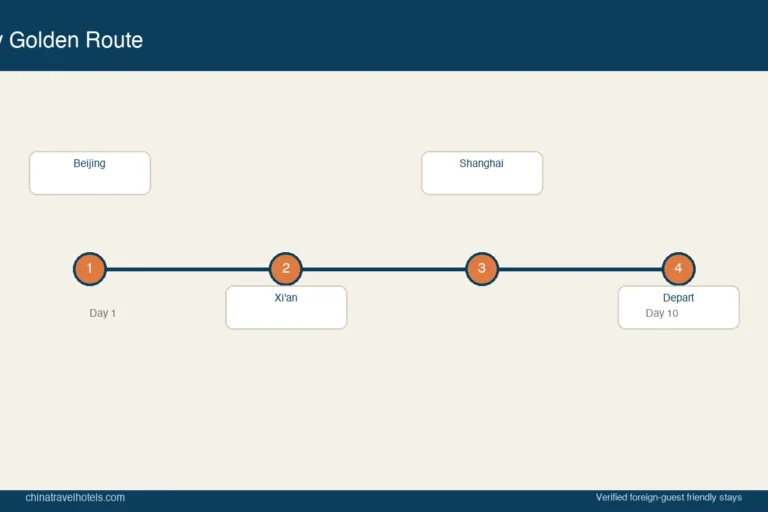
This 6-day northern route — Datong, Pingyao and Xi’an — follows the old imperial road with two nights in each city, riding high-speed trains between them. You get cave Buddhas, a perfectly preserved Ming walled town, and the Terracotta Army, all on one rail line that a foreign passport navigates easily.
Quick answer
The three stops ladder neatly northwest to southeast: Datong for grottoes and a hanging temple, Pingyao for a walled Ming trading town, Xi’an for the army of clay soldiers. I rode the whole line on G/D trains and never once needed a domestic flight. Book foreigner-licensed rooms in Pingyao especially, where many courtyard inns are small.
| Night | Base | Why | Foreigner note |
|---|---|---|---|
| 1 | Datong (city centre) | Arrival, wall | Confirm passport |
| 2 | Datong | Grottoes, Hanging Temple | Keep slip |
| 3 | Pingyao Ancient City | Walled town | Inns vary on licence |
| 4 | Pingyao | Ri Sheng Chang, lanes | Re-register |
| 5 | Xi’an (Bell Tower / wall) | City, food | Most hotels ready |
| 6 | Xi’an | Terracotta, depart | Buffer night |
Day-by-day plan
Day 1 — Arrive in Datong
High-speed rail from Beijing reaches Datong South in about 2 hours; the airport also works. Stay near the rebuilt city wall or the lively ancient-city quarter. Walk the wall at night when it is lit.
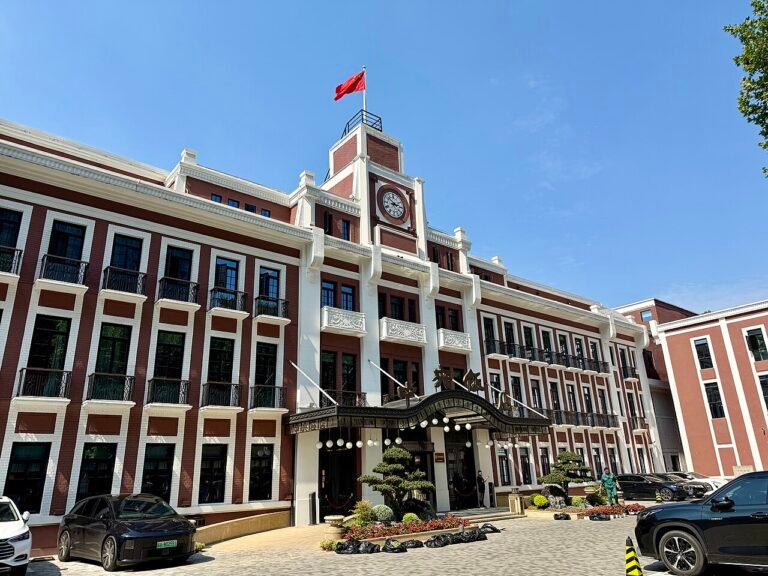
WHERE TO STAY TONIGHT: a 4-star near Datong ancient city. Our can foreigners book hotels in China guide is your licence checklist for the smaller inns here.
Transport to next: rest; grottoes are a morning drive.
Day 2 — Yungang Grottoes and Hanging Temple
The Yungang Grottoes (51,000 carved Buddhas) deserve a half-day. The Hanging Temple, clamped to a cliff on Hengshan, is 1.5 hours south — vertigo optional.
WHERE TO STAY TONIGHT: Datong again.
Transport to next: morning train Datong South → Pingyao (about 2.5 hours via Taiyuan, ¥120 / $17).
Day 3 — Pingyao Ancient City
Pingyao’s Ming-era walls enclose a car-free grid of grey-brick lanes, draft banks and old brothels turned museums. Stay inside the walls for the lantern-night atmosphere.
WHERE TO STAY TONIGHT: a courtyard inn inside the city. I confirmed foreigner registration by app message; the one I liked could, a cheaper lane neighbour could not.
Transport to next: keep the base; explore on foot.
Day 4 — Pingyao lanes and Rishengchang
China’s first draft bank, Rishengchang, and the escorted “security-guard” museum tell the town’s Qing trading story. Evening: the wall walk at sunset.
WHERE TO STAY TONIGHT: Pingyao again.
Transport to next: afternoon train Pingyao → Xi’an North (about 3 hours, ¥150 / $22).
Day 5 — Xi’an city
Xi’an’s own wall (cycle it), the Muslim Quarter for lamb skewers, and the Bell Tower.
WHERE TO STAY TONIGHT: near the Bell Tower or south gate. See our where to stay near the terracotta army Xi’an guide if you’d rather sleep by the pits instead.
Transport to next: bus/taxi to the army tomorrow.
Day 6 — Terracotta Army and depart
The warriors are 40 minutes east; go at opening to beat coaches. Then rail or fly out — keep the buffer night in Xi’an because the army visit can run long.
WHERE TO STAY TONIGHT: Xi’an airport or North-station hotel if leaving late.
Where to stay
| Base area | Best for | Price range | Getting around |
|---|---|---|---|
| Datong city centre | Wall, transit | ¥350–700 / $50–100 | Taxi, bus |
| Pingyao inside walls | Atmosphere | ¥400–900 / $58–130 | Walk |
| Xi’an Bell Tower / wall | Food, metro | ¥450–900 / $65–130 | Metro Lines 2, 4 |
Datong and Xi’an are easy for foreigners; Pingyao’s tiny courtyard inns are where you must verify the licence. A deposit hold is normal — our China hotel deposit, taxes & foreign credit card article explains the freeze so it doesn’t surprise you. Each separate check-in registers you with police; read where to stay near Pingyao ancient city for the walled-town specifics.
Intercity transport
The Beijing–Datong–Pingyao–Xi’an corridor is all high-speed rail. Train IDs are G (fastest), D, or C; your booking confirmation shows the train number that matches the station board. Buy through book on Trip.com and you can hold seats with a foreign card; the station machines read passport chips. Within Pingyao and Datong there is no metro — taxis and the occasional bus cover it. Build buffer: a missed connection in a smaller city means a longer wait than in Beijing.
Foreigner check-in & payment tips
Pingyao is the one to watch. Courtyard inns are often family-run and may lack a foreigner licence, so confirm before paying and carry RMB plus a backup card (our how to pay for Chinese hotels with a foreign card prep helps). Datong and Xi’an are smoother. Every legal stay registers you with police — routine, but the 240-hour visa-free transit hotel booking guide is worth a read if you’re entering on transit, since Xi’an is a common entry point.
When to go, packing and budget
This northern corridor is best in the shoulders. I drove the route in May and the Yungang Buddhas were crisp under blue sky; April–June and September–October are ideal. Summers are hot and crowded at the Terracotta Army, winters are dry and brutally cold but crowd-free. Pack layers either way — Datong and Pingyao sit on the loess plateau and the wind cuts.
A power bank, translation app, and ¥200 cash cover the basics; Pingyao’s lane cafés sometimes prefer cash. Comfortable shoes are essential for Pingyao’s uneven lanes and Xi’an’s wall circuit.
Indicative daily budget, ranges I last verified in October 2026:
| Item | Budget | Mid-range |
|---|---|---|
| Hotel (4-star) | ¥400 / $58 | ¥800 / $116 |
| Meals per day | ¥100 / $14 | ¥240 / $35 |
| Trains (G/D) | ¥300 / $43 | ¥450 / $65 |
| Entry fees | ¥200 / $29 | ¥200 / $29 |
Train costs are the variable; book the G/D legs early because the Beijing–Xi’an line is among China’s busiest. I compare rooms on check Agoda and Trip.com, and the China hotel price seasons guide helps avoid Golden Week spikes. A frank note: Pingyao’s charm is real but the walled town is small — two nights is plenty; don’t pad the route. For entry and rail facts I verify against https://www.nia.gov.cn/ and https://www.china-embassy.gov.cn/ before publishing.
Who this route suits
This northern route suits history lovers who’d rather see real grottoes and a walled town than tick the Beijing mega-sights again. It’s a strong pick for first-time China visitors who want to graduate from the capital to the provinces. It’s weaker for beach or nature seekers — there’s little green relief between the stone and the walls. I’d skip it in deep winter unless you love empty, freezing sites; the loess wind is brutal and the Hanging Temple walkways get icy. Photographers will be happy at Pingyao’s lantern night and the Hanging Temple, which is why I keep sending friends here with a good camera and warm layers rather than a tight schedule.